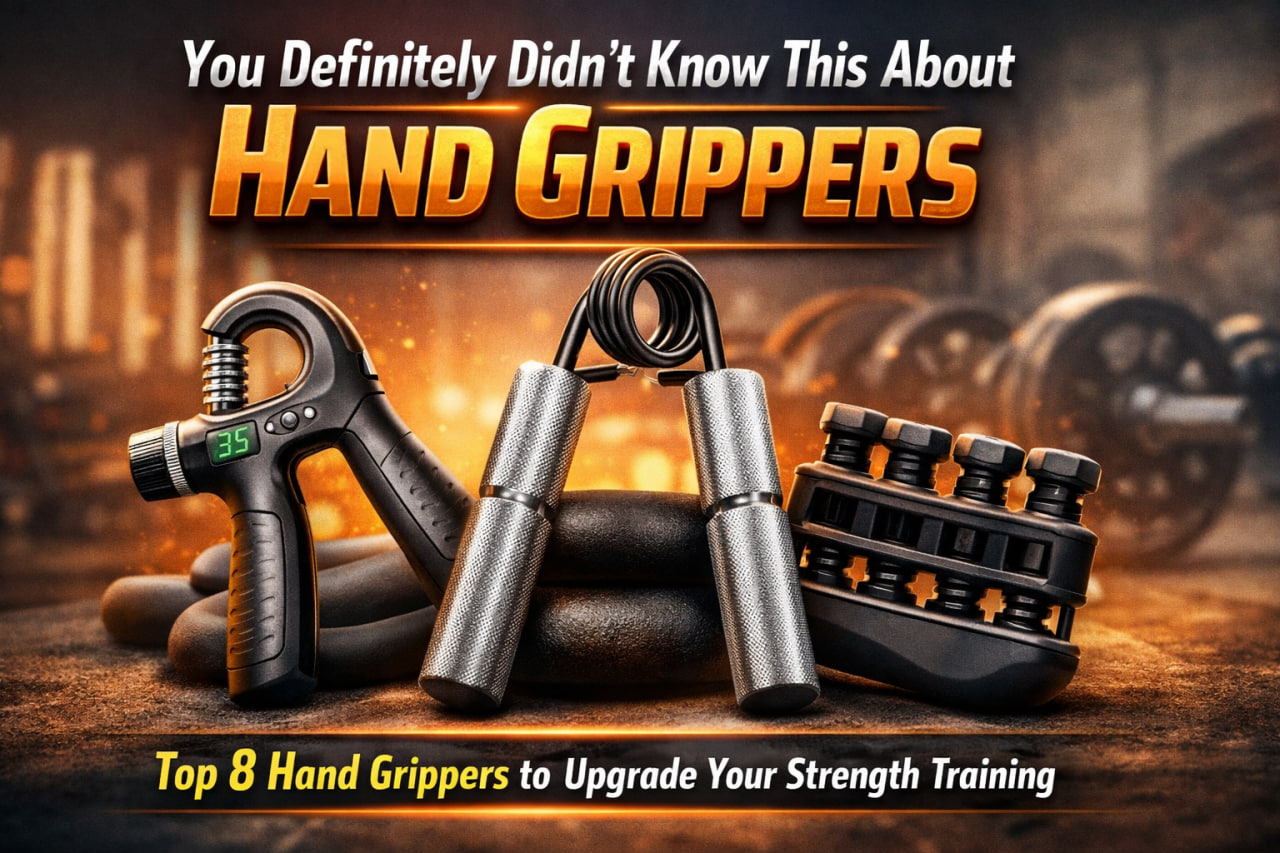
Hand grippers—often called expanders—are one of the simplest yet most effective fitness tools you can own. Compact, affordable, and incredibly versatile, they’re perfect for building grip strength, forearm endurance, and even supporting overall fitness goals. Just like in a solid cardio routine, the right tool can make all the difference.
How Did the Hand Gripper Appear?
The hand gripper has surprisingly old roots. Early versions appeared in the late 19th and early 20th centuries, when strongmen and physical culture enthusiasts trained grip strength using simple steel springs with wooden handles. These early tools were heavy, non-adjustable, and clearly designed for one thing only: raw strength.
Over time, hand grippers evolved:
- Wooden handles were replaced with rubber and ergonomic grips
- Fixed resistance turned into adjustable tension systems
- Rehabilitation models appeared alongside hardcore strength tools
Today’s expanders are lighter, smarter, safer—and suitable for everyone from office workers to athletes.
How to Choose the Right Hand Gripper
Choosing the right hand gripper may seem simple at first, but the correct choice can significantly affect your results, comfort, and safety. A well-matched expander helps you progress faster, avoid injuries, and stay motivated.
1. Determine Your Training Goal
Start by clearly defining why you need an expander.
- For general fitness and grip strength, adjustable hand grippers are the most versatile option.
- For muscle building and maximum strength, heavy-duty metal grippers with fixed resistance are better suited.
- For rehabilitation or injury recovery, choose low-resistance therapy grippers or silicone rings.
- For finger dexterity and endurance (climbing, music, esports), finger exercisers and grip rings are ideal.
2. Choose the Right Resistance Level
Resistance is the most important factor. Beginners should avoid extremely stiff grippers, as overloading the hands too early can cause strain or injury. Adjustable grippers are recommended for newcomers because they allow gradual progression. Advanced users may prefer fixed-resistance grippers to precisely target strength levels.
A good rule of thumb: you should be able to perform 10–15 controlled repetitions. If you can’t close the gripper at all—or if it feels effortless—it’s time to adjust resistance.
3. Pay Attention to Comfort and Ergonomics
Handle shape and material matter more than most people think. Look for:
- Non-slip rubber or textured handles
- Ergonomic curves that fit your palm
- Adequate handle width for your hand size
Uncomfortable handles can limit training time and cause calluses or wrist strain.
4. Consider Build Quality and Durability
High-quality metal springs and reinforced joints ensure long-term use. Cheap plastic parts may crack or lose resistance over time, especially under heavy load. If you plan frequent training, durability is worth prioritizing.
5. Think About Progression and Variety
If you enjoy structured workouts, consider gripper sets or kits with multiple tools. Having different resistance levels allows you to warm up properly, train endurance, and push maximum strength in one session.
In short: the best expander is one that matches your current strength, supports your goals, feels comfortable in your hand, and allows you to progress safely. A smart choice today means stronger hands tomorrow. 💪
Below is a carefully curated list of the top 8 hand grippers, written in the same practical, review-driven style you asked for. Whether you’re a beginner or a serious strength enthusiast, there’s an option here for you.
1. Adjustable Resistance Hand Gripper (11–220 lbs)
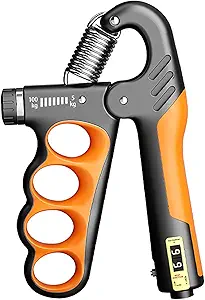
A versatile grip strengthener designed for users at nearly any strength level.
Main Characteristics:
- Resistance Range: Approximately 11–220 lbs (5–100 kg) — adjustable for progression.
- Material: Heavy-duty metal spring with ergonomic plastic/rubber handles.
- Adjustability: Twist or dial system lets you change tension without swapping tools.
- Intended Use: Gradual strength building from rehabilitation to advanced grip levels.
Key Benefits:
• Perfect for everyday gripping work and steady progression.
• Ergonomic handles reduce hand fatigue during longer sessions.
• Great choice for rock climbers, tennis players, and general fitness.
Typical Use Case:
Ideal for building consistent forearm, hand, and finger strength with one tool that grows with you.
See this product on Amazon here.
2. Heavy-Duty Metal Hand Gripper (~200–300 lbs)
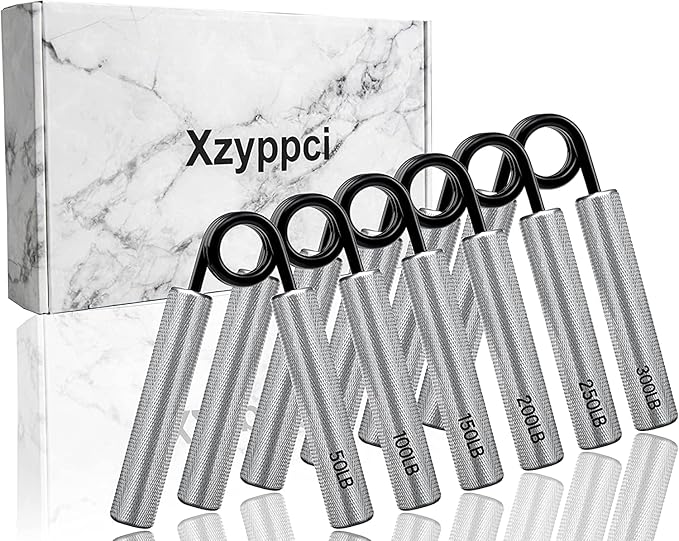
A classic coil-style metal gripper built for seasoned grip trainers.
Main Characteristics:
- Resistance Range: Roughly 200–300 lbs — aimed at advanced users.
- Material: Durable metal spring with knurled (textured) metal handles for secure grip.
- Design: Traditional two-handle spring structure.
- Intended Use: Crushing grip training, sport-specific strength work.
Key Benefits:
• High resistance builds serious grip and forearm strength.
• Metal handles with textured grip keep hands from slipping.
• Compact design makes it easy to train anywhere.
Typical Use Case:
Best if you already have baseline grip strength and want a challenge that pushes your limits.
See this product on Amazon here.
3. Hand Gripper Set (Multiple Fixed Resistances)
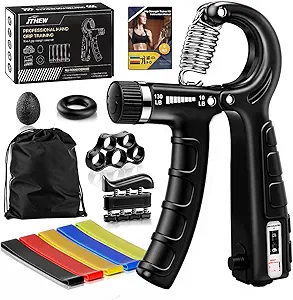
A pack of grippers at progressive resistance levels so you can track gains clearly.
Main Characteristics:
- Multiple Units: Usually 2 or more grippers with different resistance levels — for example 10 lbs & 130 lbs range.
- Material: Alloy steel coil springs and rubberized or ergonomic handles.
- Purpose: Step-by-step strength progression.
- Pack Format: Often sold in a set to offer value.
Key Benefits:
• Clearly defined stages help you track progress.
• Allows beginners to start easy and upgrade to tougher resistance.
• Handy for shared use among family members.
Typical Use Case:
Great for structured training plans or group workouts with varying strength needs.
See this product on Amazon here.
4. Digital Hand Gripper with Repetition Counter
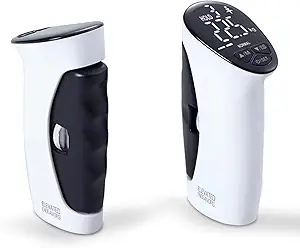
A smart grip trainer that helps you record performance without guessing.
Main Characteristics:
- Built-In Counter: Tracks reps with a digital display — useful for tracking sets.
- Adjustable Tension: Commonly around 11–132 lbs (5–60 kg).
- Ergonomic Handles: Contoured to fit hands and reduce fatigue.
- Material: Metal spring with plastic/rubber comfort grips.
Key Benefits:
• Helps keep you accountable with rep tracking.
• Adjustable for different strength levels.
• Great for keeping workout logs without external apps.
Typical Use Case:
Perfect if you enjoy quantifying progress and want an easy way to track reps.
See this product on Amazon here.
5. Finger Exerciser & Grip Trainer Combo Kit
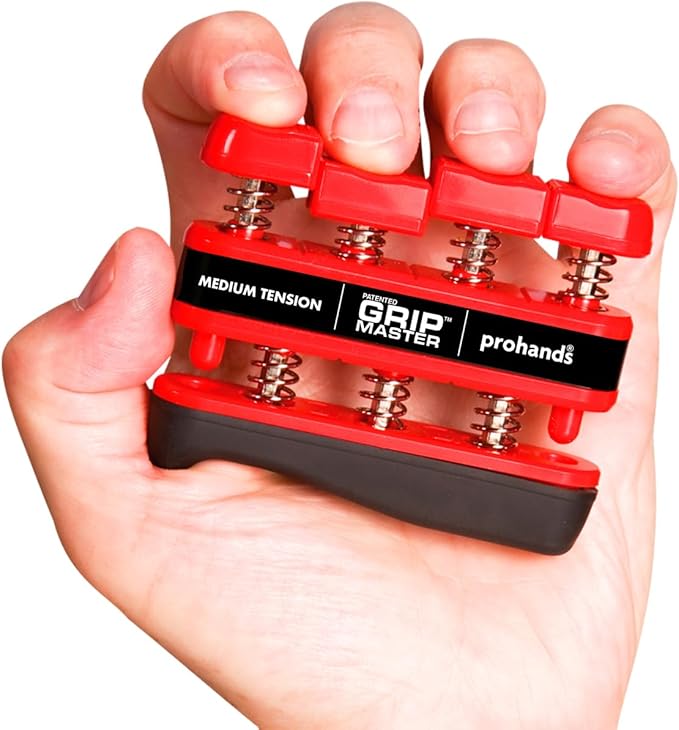
A multi-tool hand training set that focuses on individual fingers as well as whole-hand strength.
Main Characteristics:
- Components: May include several tools such as grip rings, finger stretchers, and small stress balls.
- Resistance Levels: Vary based on tool type — from light (rehab/stretching) to moderate.
- Material: Silicone rings, foam, and spring units.
- Purpose: Comprehensive hand, finger, and forearm training.
Key Benefits:
• Targets finger independence and dexterity.
• Useful for climbers, musicians, and those recovering from hand fatigue.
• Often more fun and varied than a single gripper.
Typical Use Case:
Ideal for balanced hand training, especially for finger health and mobility.
See this product on Amazon here.
6. Therapy Hand Gripper for Rehabilitation
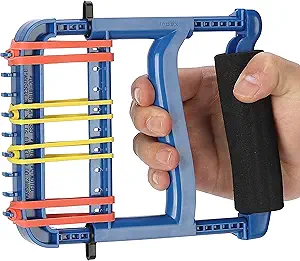
Lower resistance, gentle grip trainer aimed at injury recovery and mobility work.
Main Characteristics:
- Resistance: Lower than typical grippers — accessible for rehab use.
- Material: Soft or cushioned grips with lighter springs or silicone resistance.
- Ergonomics: Designed for comfort during extended therapy sessions.
- Uses: Helps improve range of motion and blood flow.
Key Benefits:
• Gentle enough for post-injury strengthening.
• Low-impact training reduces risk of strain.
• Often recommended by therapists for wrist/hand recovery.
Typical Use Case:
Best for anyone rehabbing after injury, dealing with carpal tunnel symptoms, or easing stiffness.
See this product on Amazon here.
7. Adjustable Grip Ring (Silicone Expander)
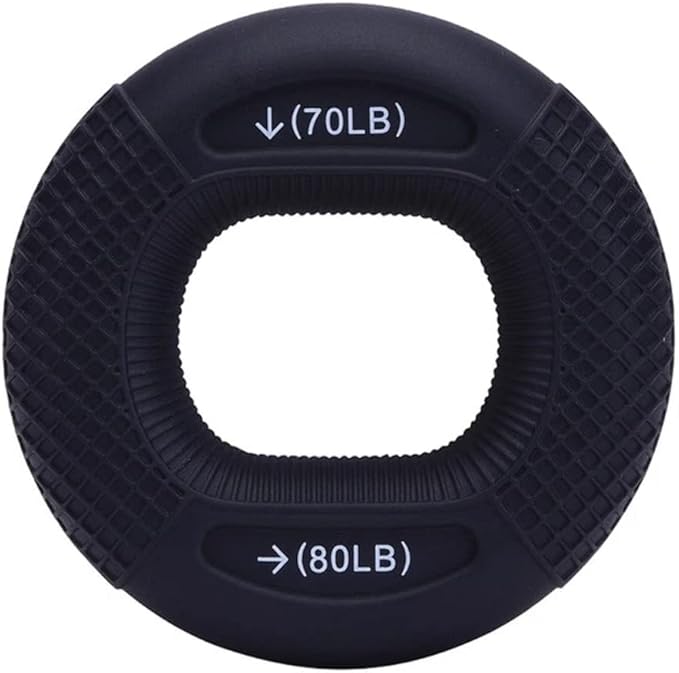
Not a classic spring gripper, but a silicone resistance ring that offers a quieter and joint-friendly option.
Main Characteristics:
- Material: High-resistance silicone or rubber.
- Resistance Options: Frequently sold in packs (light, medium, heavy).
- Design: Circular expander that you squeeze with fingers together.
- Purpose: Endurance, joint mobility, and gentle grip strength work.
Key Benefits:
• Quiet and portable.
• Gentle on joints — good for warm-up and cool-down.
• Can be used anywhere (office, travel, gym).
Typical Use Case:
A nice everyday tool for finger, hand, and forearm activity between workouts.
See this product on Amazon here.
8. Professional Grip Strength Trainer Set (Hand Grippers + Accessories)
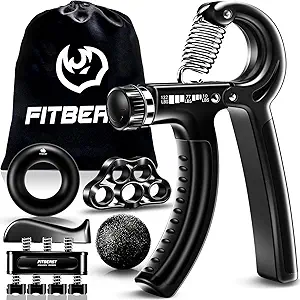
A comprehensive kit combining traditional grippers with accessories like stress balls and bands.
Main Characteristics:
- Components: Multiple grip tools — adjustable grippers, finger bands, stress relief balls.
- Resistance Variety: Tools range from light rehab levels to moderate challenge.
- Use Case: Full-hand and forearm conditioning.
Key Benefits:
• Great value — multiple tools in one kit.
• Covers strength, recovery, and mobility.
• Great for families or shared use.
Typical Use Case:
Perfect if you want both strength training and rehab tools in one package.
See this product on Amazon here.
What Are the Benefits of Hand Gripper Training?
Squeezing a hand gripper may look simple, but it delivers a surprisingly wide range of benefits for both fitness and everyday life. Regular training with an expander strengthens not only your hands, but also improves overall upper-body performance and hand health.
1. Increased Grip and Forearm Strength
Hand grippers primarily target the muscles of the fingers, hands, wrists, and forearms. A stronger grip directly translates to better performance in weightlifting, climbing, calisthenics, tennis, martial arts, and many other sports. If your grip fails, the exercise usually ends—so improving it removes a major limiting factor.
2. Better Wrist Stability and Injury Prevention
Stronger hand and forearm muscles help stabilize the wrist joint. This reduces the risk of common issues such as tendon strain, wrist pain, and overuse injuries—especially important for people who work at a computer or perform repetitive hand movements.
3. Improved Endurance and Muscle Control
Unlike many gym exercises, gripper training builds endurance and fine motor control. This is especially useful for activities that require prolonged gripping, such as cycling, rowing, or manual work.
4. Support for Rehabilitation and Joint Health
Light-resistance grippers and silicone expanders are often used in rehabilitation. They help increase blood flow, restore mobility, and gradually rebuild strength after injury or surgery—all with low joint impact.
5. Stress Relief and Mental Focus
Squeezing a gripper can be surprisingly relaxing. The repetitive motion helps relieve stress, improve focus, and keep your hands active during breaks at work or study sessions.
6. Everyday Functional Strength (and the Handshake Test)
Stronger hands make daily tasks easier—from opening jars to carrying heavy bags. And let’s not ignore the social bonus:
a firm, confident handshake. Not the “bone-crusher” kind—but the kind that makes the other person think, “Okay… this person definitely trains.” 🤝
In summary, hand gripper training is a small habit with big returns. It builds strength, protects joints, supports recovery, reduces stress, and even upgrades your handshake game—all with a tool that fits in your pocket. 💪
Comparative Table of the Presented Hand Grippers
| Model / Type | Resistance Range | Material | Best For | Key Features |
|---|---|---|---|---|
| Adjustable Resistance Hand Gripper | ~11–220 lbs (5–100 kg) | Metal spring + rubber handles | Beginners to intermediate users | Adjustable resistance, suitable for long-term progression |
| Heavy-Duty Metal Hand Gripper | ~200–300 lbs (90–136 kg) | Solid metal | Advanced users | Extremely high resistance, built for maximum strength |
| Hand Gripper Set (Multiple Resistances) | Various fixed levels | Steel + ergonomic handles | Beginners and intermediate users | Multiple resistance levels for structured progress |
| Digital Hand Gripper with Counter | ~11–132 lbs (5–60 kg) | Metal + plastic | Users who track progress | Built-in repetition counter, adjustable tension |
| Finger Exerciser & Grip Trainer Combo | Light to medium | Silicone / rubber / springs | Musicians, climbers, rehab | Trains individual fingers and coordination |
| Therapy Hand Gripper for Rehab | Very light | Soft, ergonomic materials | Rehabilitation and recovery | Gentle resistance, joint-friendly |
| Adjustable Grip Ring (Silicone Expander) | Low to medium | Silicone | All levels, office & travel use | Silent, compact, easy on joints |
| Professional Grip Strength Trainer Set | Mixed resistance | Multiple materials | Wide range of users | Complete kit for strength, rehab, and mobility |
Quick Selection Tips
📈 For strength and progression:
- Heavy-Duty Metal Hand Gripper and Adjustable Resistance Hand Gripper are ideal if you already have basic grip strength and want to build power.
📊 For tracking progress:
- Digital Hand Gripper with Counter is perfect for users who like to count reps and monitor performance.
🧠 For full hand training:
- Professional Grip Strength Trainer Set and Hand Gripper Set offer multiple resistance options and exercise variety.
🤲 For rehabilitation and everyday use:
- Therapy Hand Gripper and Silicone Grip Ring provide gentle resistance and are suitable for frequent, low-impact training.
Conclusion
Hand grippers may look simple, but they are one of the most effective and accessible training tools you can add to your fitness routine. They require no gym, take up almost no space, and can be used anywhere—at home, at work, or on the go. Despite their compact size, expanders deliver real results by strengthening your hands, forearms, and wrists while supporting overall performance and injury prevention.
Whether your goal is building serious grip strength, improving endurance, recovering from an injury, or simply keeping your hands active during the day, there is an expander that fits your needs. Adjustable models offer flexibility, heavy-duty grippers push strength limits, and softer options support rehabilitation and joint health.
Most importantly, consistent use makes the difference. Even a few minutes a day can lead to noticeable improvements over time. Stronger hands mean better workouts, easier daily tasks, and yes—more confident handshakes.
Choose the expander that matches your goals, stay consistent, and let small squeezes lead to big strength gains. 💪