First of all, do you know how to run properly?
Good running technique helps you run more efficiently, reduce fatigue, and lower the risk of injury. Small adjustments in posture and movement can make a big difference in how comfortable and effective your runs feel.
1. Maintain Good Posture
Run tall with your head up and eyes looking forward. Keep your shoulders relaxed (not hunched) and your chest open. Avoid leaning too far forward or backward—your body should form a straight line from head to hips, with a slight natural forward lean from the ankles.
2. Relax Your Arms and Hands
Your arms should swing naturally at about a 90-degree angle. Keep your hands relaxed—imagine holding a fragile object, not clenching a fist. Arm movement should go forward and backward, not across your body, to maintain balance and efficiency.
3. Focus on Foot Strike
Aim to land your foot under your body rather than far in front of you. A midfoot or forefoot strike often reduces impact compared to heavy heel striking, though the best strike is one that feels natural and pain-free. Avoid overstriding, as it increases stress on your joints.
4. Keep a Steady Cadence
A smooth, consistent rhythm helps conserve energy. Shorter, quicker steps are usually more efficient than long strides. While there’s no perfect number for everyone, many runners benefit from a cadence around 160–180 steps per minute, depending on height and pace.
5. Breathe Deep and Controlled
Use deep, rhythmic breathing to supply enough oxygen to your muscles. Try breathing through both your nose and mouth, especially during faster runs, and keep a steady breathing pattern that matches your pace.
Proper running technique is about efficiency, not perfection. Stay relaxed, move naturally, and focus on smooth, controlled motion. Over time, good form will help you run longer, faster, and with fewer injuries.
Proper Running Intensity
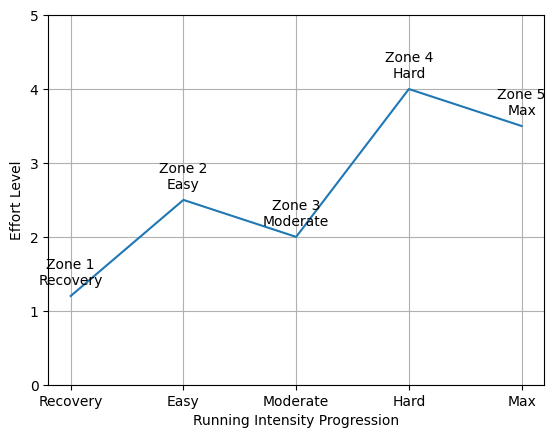
Running intensity is not meant to stay constant. Effective training follows a natural pattern of rises and drops in effort, allowing the body to adapt, recover, and improve over time. The graph above illustrates how running intensity changes across different zones rather than increasing in a straight, uninterrupted line.
Zone 1 represents recovery running. This is the lowest intensity level, used for warm-ups, cool-downs, and recovery days. The effort feels very easy and allows the body to repair and reset.
Zone 2 shows easy aerobic running. Intensity increases, but the pace remains comfortable and conversational. This zone forms the foundation of endurance training and should make up the largest portion of weekly mileage.
Zone 3 reflects moderate or tempo running. Here, intensity dips slightly after easy running to show controlled effort. This zone challenges endurance and teaches the body to maintain a steady pace for longer periods.
Zone 4 marks a strong rise in intensity. Running at this level feels hard and focused, close to race pace. It improves speed, strength, and the ability to handle fatigue.
Zone 5 represents maximum effort. Although intensity is high, it is not sustained for long. Short sprints or intervals in this zone develop power and speed, followed by a necessary reduction in effort for recovery.
Key takeaway: successful running is built on variation. Intensity should rise and fall throughout training, not remain constantly high. This balance leads to better performance, reduced injury risk, and long-term progress.
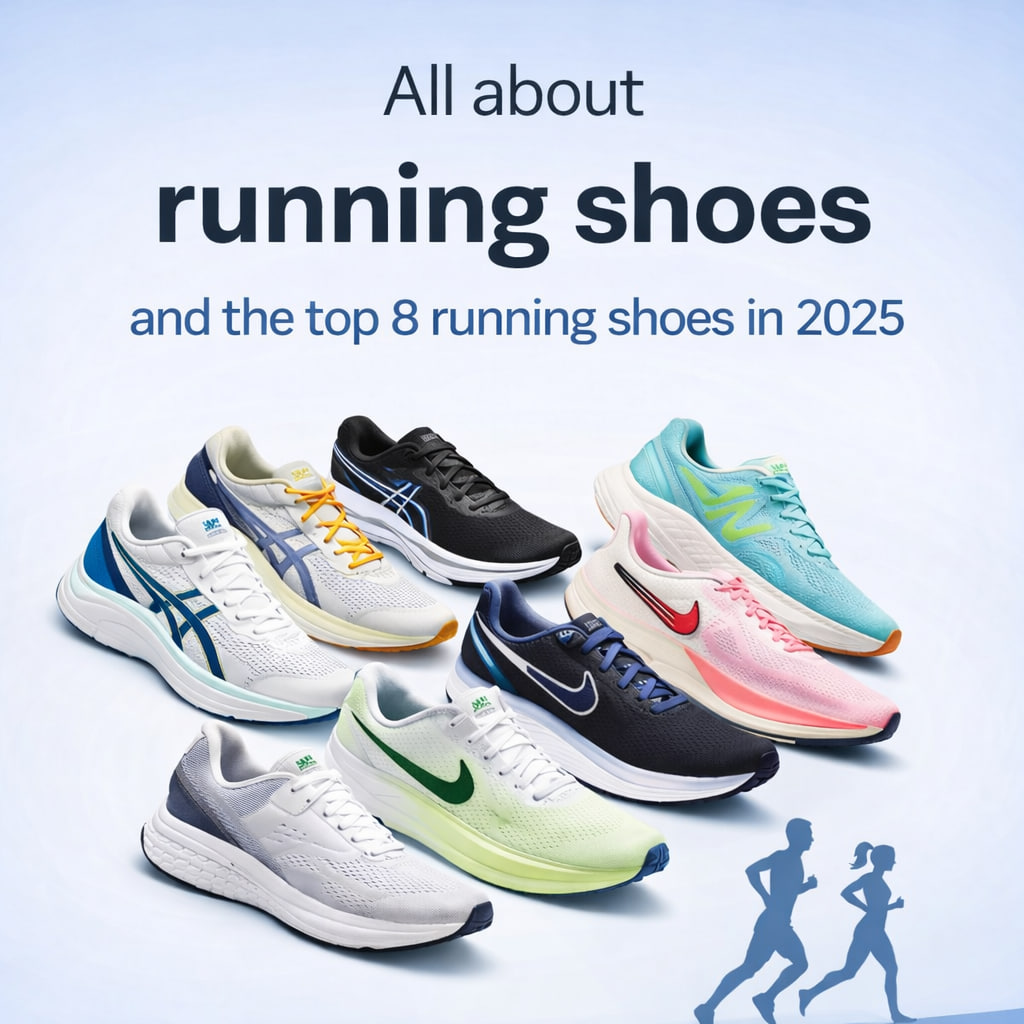
Running shoes are the foundation of every successful run. The right pair can improve performance, reduce injury risk, and make each mile more comfortable—whether you’re training for a marathon, or just starting out. In 2025, brands are pushing innovation with lighter foams, better energy return, and smarter designs. Below is a curated list of the top 8 best running shoes, covering neutral runners, stability needs, and racing performance.
1. Nike Air Zoom Pegasus 41
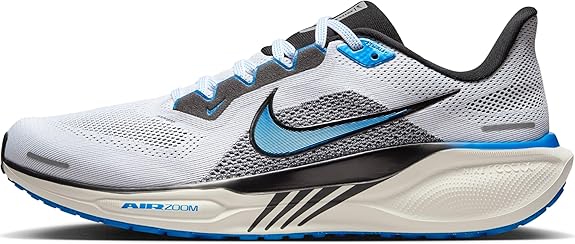
The Nike Air Zoom Pegasus 41 is a true all-rounder designed for runners of all levels. It features a balanced midsole that combines responsiveness with cushioning, making it suitable for both short daily runs and longer training sessions. The updated Zoom Air units provide a smooth and energetic ride, helping maintain efficiency over distance.
The upper is breathable yet supportive, adapting well to different foot shapes. A durable rubber outsole ensures reliable traction on asphalt and concrete, making this shoe ideal for everyday road running. While it’s not a race-focused model, its versatility and durability make it one of the safest choices for consistent training.
Pros:
- Balanced cushioning suitable for daily training
- Durable outsole for road running
- Comfortable fit for a wide range of runners
Cons:
- Not the lightest option for racing
- Limited stability support for overpronators
Best for: Daily runs, beginners to intermediate runners.
See this product on Amazon here.
2. ASICS Gel-Kayano 31
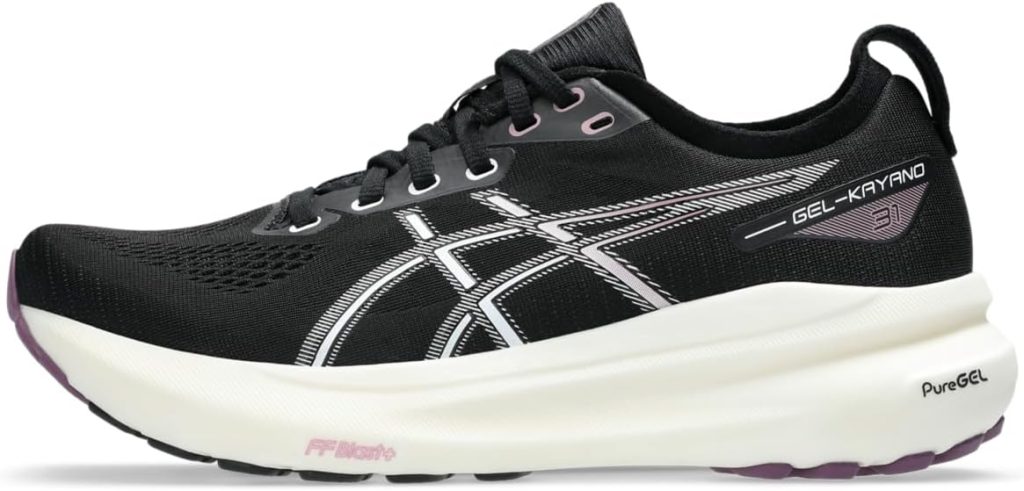
The ASICS Gel-Kayano 31 is built for runners who need stability and structured support. It uses ASICS’ advanced guidance system to control overpronation while maintaining a smooth and natural stride. The Gel cushioning absorbs impact effectively, reducing stress on knees and joints during long runs.
The shoe offers a secure heel fit and a supportive midfoot, making it especially valuable for runners prone to fatigue-related form breakdown. Though slightly heavier than neutral models, it excels in comfort and injury prevention over long distances.
Pros:
- Excellent stability and arch support
- Smooth heel-to-toe transition
- High durability
Cons:
- Slightly heavier than neutral shoes
- Premium price point
Best for: Overpronators and long-distance runners.
See this product on Amazon here.
3. Adidas Ultraboost Light
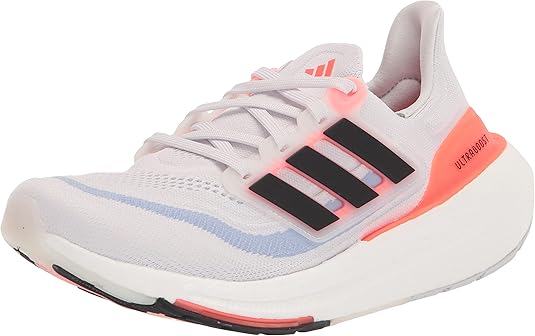
The Ultraboost Light focuses on comfort and energy return. Its Boost foam midsole provides a soft yet springy feel, making every step cushioned and responsive. This model is particularly popular among runners who value comfort and versatility, as it transitions easily from running to casual wear.
The Primeknit upper wraps the foot securely, offering a sock-like fit that adapts to movement. While it performs well for steady-paced runs, its weight and softer feel make it less ideal for fast intervals or races.
Pros:
- Boost foam delivers strong energy return
- Sock-like Primeknit upper
- Stylish enough for casual wear
Cons:
- Heavier than race-focused shoes
- Less responsive for speed workouts
Best for: Comfort-focused runners and everyday wear.
See this product on Amazon here.
4. Saucony Endorphin Speed 4
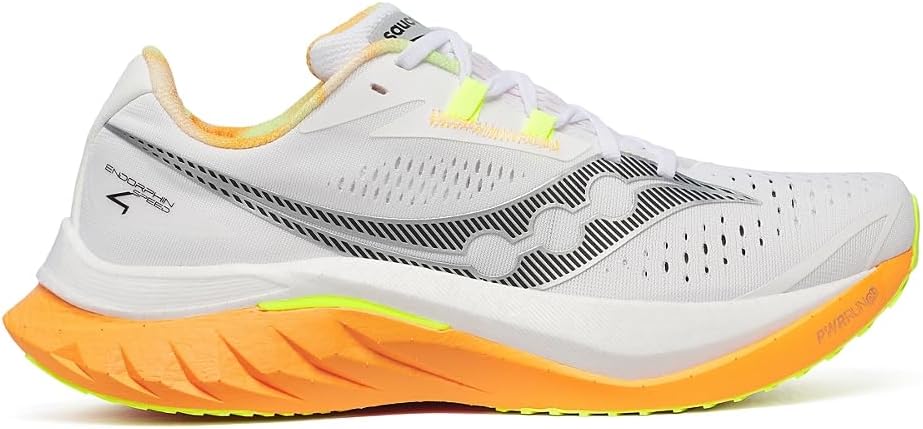
The Saucony Endorphin Speed 4 is designed for runners who want speed without the stiffness of a carbon plate. It features a lightweight foam midsole paired with a nylon plate, delivering a snappy and efficient toe-off.
This shoe shines during tempo runs, intervals, and race simulations. Its aggressive geometry encourages forward motion, helping runners maintain fast paces with less effort. However, the lighter construction means it’s not built for heavy daily mileage.
Pros:
- Lightweight and highly responsive
- Nylon plate enhances propulsion
- Excellent for speed workouts
Cons:
- Less durable for daily mileage
- Narrow fit for some runners
Best for: Speed training and race preparation.
See this product on Amazon here.
5. Hoka Clifton 9
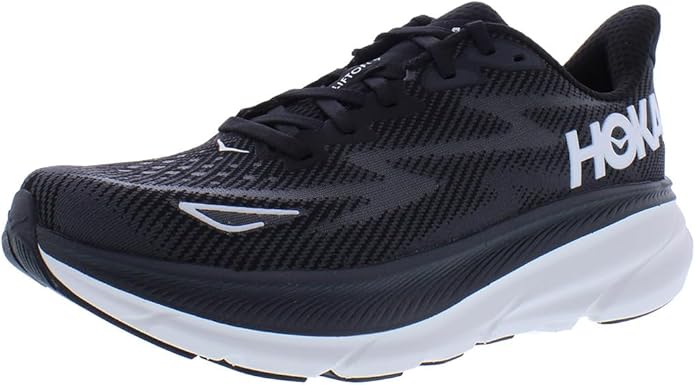
The Hoka Clifton 9 is known for maximal cushioning combined with surprisingly low weight. It offers excellent shock absorption, making it ideal for runners who want to protect their joints during long or frequent runs.
The wide base enhances stability without using traditional support features, creating a smooth and forgiving ride. While it excels in comfort, the soft cushioning reduces ground feel, which may not appeal to runners seeking a more responsive sensation.
Pros:
- Lightweight despite maximal cushioning
- Smooth and stable ride
- Great shock absorption
Cons:
- Less ground feel
- Not ideal for sprinting
Best for: Long runs and recovery days.
See this product on Amazon here.
6. New Balance Fresh Foam X 1080v13
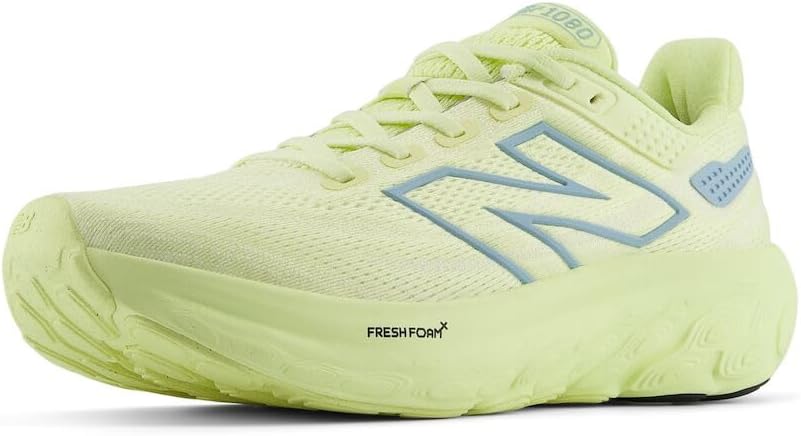
The Fresh Foam X 1080v13 is one of the most comfortable neutral running shoes available. Its plush midsole adapts to foot pressure, providing consistent cushioning across different paces and distances.
The upper is engineered for breathability and support, reducing hot spots and improving lockdown. This shoe is highly versatile, working well for both easy runs and moderate training efforts. Some runners may find the cushioning too soft for aggressive pacing.
Pros:
- Plush Fresh Foam X cushioning
- Breathable and secure upper
- Works well for various distances
Cons:
- Cushioning may feel too soft for some
- Premium pricing
Best for: Neutral runners seeking all-around comfort.
See this product on Amazon here.
7. Brooks Ghost 16
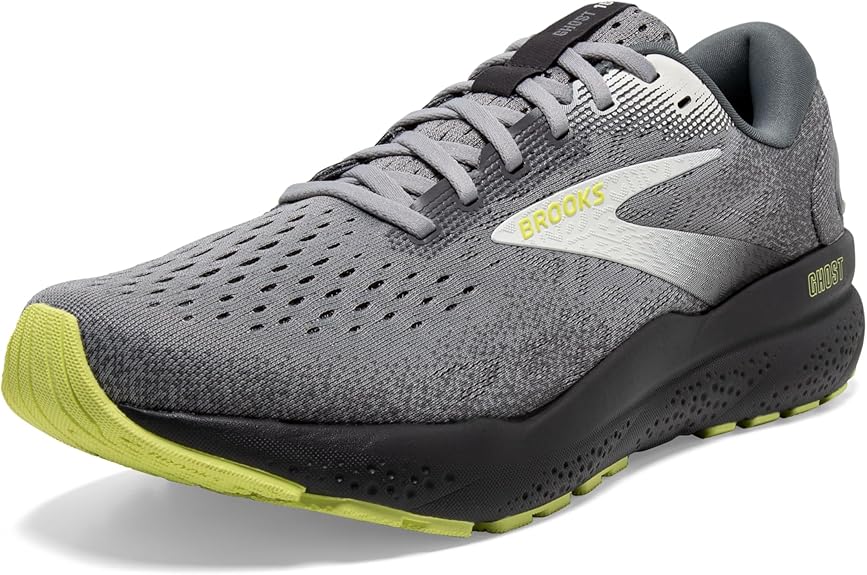
The Brooks Ghost 16 is a reliable and predictable daily trainer. It offers balanced cushioning, a smooth ride, and excellent durability. This model is especially popular among runners who value consistency and comfort over flashy design.
The shoe provides a neutral platform with enough structure to feel stable, making it suitable for a wide range of runners. While it doesn’t deliver explosive speed, it performs exceptionally well for everyday mileage.
Pros:
- Smooth, predictable ride
- Excellent durability
- Comfortable for long-term use
Cons:
- Conservative design
- Less responsive than modern super shoes
Best for: Everyday training and beginners.
See this product on Amazon here.
8. Nike Vaporfly 3
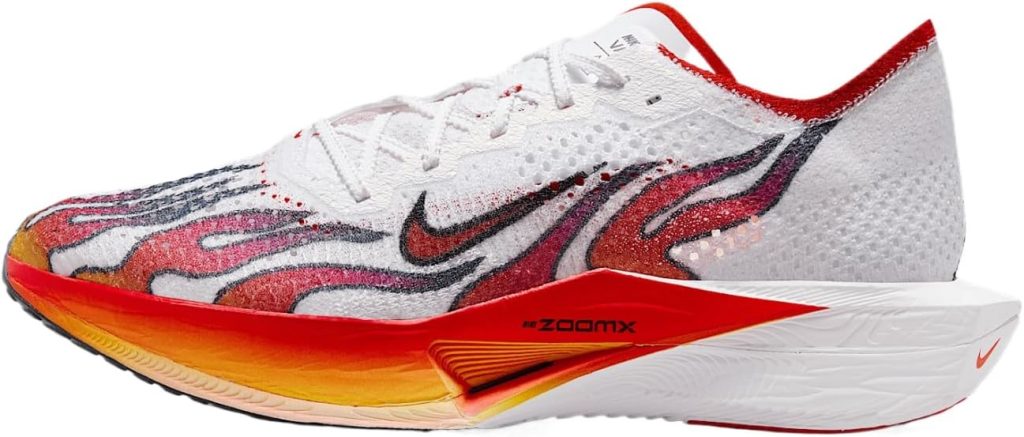
The Nike Vaporfly 3 is built for speed and competition. Featuring a carbon-fiber plate and ultra-light foam, it maximizes energy return and running efficiency. This shoe is designed to help runners maintain faster paces with less effort, especially over race distances.
Its aggressive design and minimal cushioning make it unsuitable for daily training, but unbeatable on race day. The Vaporfly is best reserved for competitions or key workouts.
Pros:
- Carbon-fiber plate boosts propulsion
- Extremely lightweight
- Ideal for racing
Cons:
- Expensive
- Not designed for daily training
Best for: Competitive runners and race day.
See this product on Amazon here.
A comparative table of all 8 running shoes with key advantages, suitable types of running and situations where they are less effective
| Model | Key Strengths | Best Suited For | Not Ideal For |
|---|---|---|---|
| Nike Air Zoom Pegasus 41 | Balanced cushioning, versatile, durable | Daily training, varied paces, beginners | Fast racing, specialized workouts |
| ASICS Gel-Kayano 31 | Excellent stability, supportive fit | Overpronators, long runs, injury prevention | Lightweight speed training |
| Adidas Ultraboost Light | Plush comfort, energy return | Easy runs, casual and mixed wear | Competitive racing, speed workouts |
| Saucony Endorphin Speed 4 | Responsive and snappy, fast feel | Tempo runs, intervals, race prep | Heavy high-mile training |
| Hoka Clifton 9 | Maximum cushioning, joint protection | Long/comfortable runs, recovery | Sprinting, sharp responsiveness |
| New Balance Fresh Foam X 1080v13 | Plush cushioning, breathable fit | All-around runs, varying paces | Very competitive racing |
| Brooks Ghost 16 | Reliable, smooth ride, versatile | Daily mileage, beginners/intermediate | Explosive speed workouts |
| Nike Vaporfly 3 | Extreme energy return, race efficiency | Races & personal best attempts | Daily training, recovery runs |
How to Choose the Right Running Shoes?
Choosing the right running shoes is essential for comfort, performance, and injury prevention. With so many models on the market, it’s important to focus on a few key factors that match your body, running style, and goals.
1. Understand Your Foot Type and Pronation
Start by identifying how your foot moves when you run.
- Neutral pronation: Your foot rolls slightly inward—most neutral shoes will work well.
- Overpronation: Your foot rolls excessively inward—look for stability or support shoes.
- Underpronation (supination): Your foot rolls outward—shoes with extra cushioning are ideal.
Knowing this helps you choose shoes that support natural movement and reduce stress on joints.
2. Choose the Right Cushioning
Cushioning affects comfort and impact absorption.
- Soft, maximal cushioning is best for long-distance runs and recovery days.
- Moderate cushioning works well for daily training.
- Firm, responsive cushioning is ideal for speed workouts and racing.
Your body weight, running surface, and personal preference all play a role here.
3. Match Shoes to Your Running Goals
Different shoes are designed for different purposes:
- Daily trainers: Durable and comfortable for regular mileage.
- Tempo/race shoes: Lightweight and responsive for speed and performance.
- Trail shoes: Extra grip and protection for off-road running.
Using the right shoe for each type of run can improve results and extend shoe life.
4. Focus on Fit and Comfort
Fit is more important than brand or price.
- Leave about a thumb’s width of space in the toe box.
- Ensure the heel feels secure without slipping.
- The shoe should feel comfortable immediately—no “break-in” pain.
If possible, try shoes on later in the day when your feet are slightly swollen, similar to how they feel during a run.
5. Consider Weight and Breathability
Lighter shoes feel faster and more agile, while heavier models often offer more support and durability. Breathable uppers help keep feet cool and reduce the risk of blisters, especially during long runs or in warm conditions.
6. Replace Shoes at the Right Time
Even the best running shoes lose cushioning over time. Most should be replaced after 300–500 miles (480–800 km). Worn-out shoes can increase injury risk, even if they still look fine on the outside.
The “best” running shoe is the one that feels right for you. Comfort, proper support, and suitability for your running goals matter far more than trends or hype. Take time to choose wisely, and your runs will feel smoother, safer, and more enjoyable.
Conclusion
The best running shoes of 2025 cater to every type of runner—from cushioned daily trainers like the Hoka Clifton 9 to race-day rockets like the Nike Vaporfly 3. Whether your focus is comfort, speed, or injury prevention, choosing the right pair can elevate your running experience. Invest in shoes that match your goals, and every run will feel stronger, smoother, and more enjoyable. 🏃♂️👟